- Adspire
- Posts
- You’re missing the real northstar
You’re missing the real northstar
👍The category is telling you what to run. you’re not listening correctly, Three lifecycle gaps quietly draining your ecommerce revenue today, and more

Welcome to Adspire, where every edition delivers insights, strategies, and inspiration to fuel your advertising brilliance. 🤯
Just a quick heads-up! If you stumbled upon us through a friend, make sure to subscribe here! That way, you’ll never miss out on the edition
Together with Tatari
Meta Didn't Get Harder. You Just Hit the Ceiling.
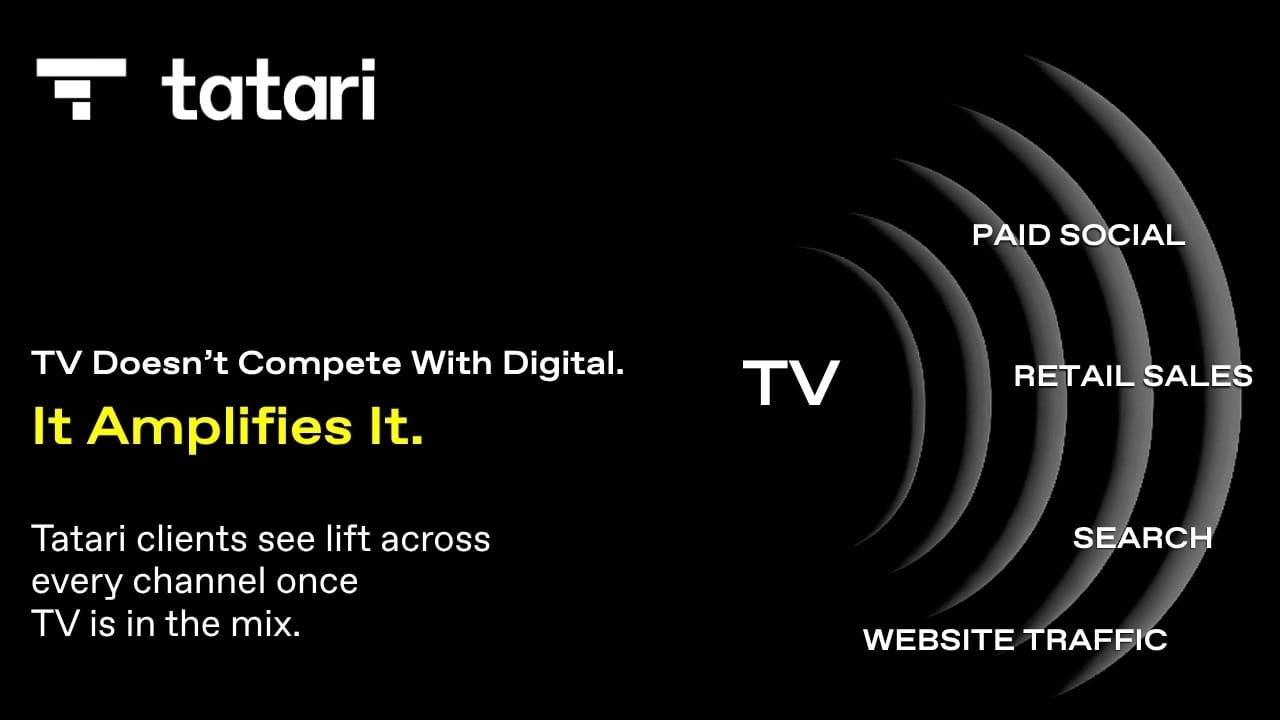
You've been told TV is out of reach. What nobody mentioned is that the measurement gap closed, the minimums dropped, and the brands hitting their numbers right now didn't stumble onto some new creative angle.
They opened a different channel entirely.
Tatari is a TV buying platform that lets you run across linear TV, streaming, and direct publisher buys, all from one place.
You see exactly where every ad aired, so nothing is hidden, and nothing is wasted. Every dollar ties back to actual site visits, signups, and purchases, not impressions that look good in a report and prove nothing in your books.
Aroma360 cut CPA by 80% and doubled ROAS from a $14K linear pilot
Knix hit a 70% lower CPA and 9,000 site visits within 5 minutes of a single TV spot airing
Calm cut CAC by 52% and drove 612K incremental installs running linear and streaming together
Over 400 brands already run TV this way. You're either in that group, or you're funding their growth with every Meta dollar you spend.
👍The Category Is Telling You What to Run. You’re Not Listening Correctly.
Most creative research starts with the wrong unit of analysis. Buyers pick a competitor, pull their top ads, and brief against what they see.
The problem isn’t the process. It’s that a single brand’s creative mix reflects their budget, their agency’s preferences, and whatever worked eighteen months ago. That’s not market signal. That’s one team’s history.
The actual signal is spend-weighted runtime across the entire category.
Why spend-weighted runtime changes the read
Runtime alone is a weak filter. Here’s what most buyers miss:
A 60-day ad from a brand spending $8K a month tells you almost nothing
A 60-day ad from a brand spending $400K a month tells you the market has validated this angle under real auction pressure, against real alternatives
Strip the spend context and you’re treating both the same
Pull the top 50 brands in your category. Filter for 14-plus day runtime. Weight by estimated spend. The ads at the top aren’t just survivors. They’re angles the market has stress-tested with serious money and kept funding anyway.
The variable underneath the angle
Clustering by angle (problem-led, identity-led, comparison-led) is one layer too shallow. Two ads can share the same angle and target completely different awareness stages. When you cluster, add a second axis:
Cold awareness: What’s pulling new buyers into the category for the first time
Warm consideration: What’s closing buyers who are already comparing solutions
These require different briefs, different structures, and different success metrics. A problem-led ad written for someone who’s never heard of your category is a fundamentally different creative bet than a problem-led ad written for someone actively evaluating options.
Conflating them is why most category research produces creative that looks identical to everything already in the feed.
Where the actual opportunity lives
Once you’ve mapped spend-weighted runtime against awareness stage, look for the cluster that’s winning but thin. The angle is rewarding with long runtimes but where fewer than five brands are executing well.
That’s not a crowded angle. That’s an opening.
Brief into the gap, not into the pack. Your job isn’t to make a better version of what’s already dominating. It’s to own the territory the category leaders are underleveraging.
That’s what separates creative research from creative strategy.
⚡Most Beauty Brands Lose Revenue in Three Key Lifecycle Gaps
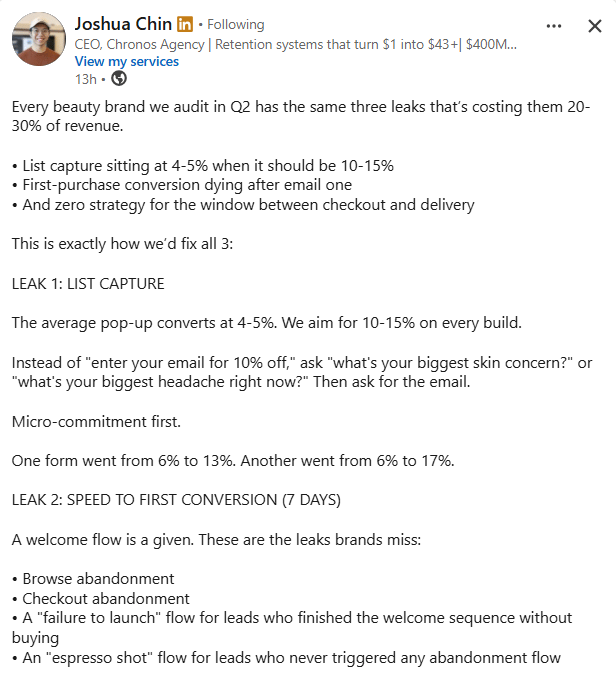
This post identifies three high-impact leaks in ecommerce: weak list capture, poor conversion from new leads, and missed post-purchase monetization. Instead of chasing new traffic, it focuses on fixing these lifecycle gaps to unlock more revenue from existing visitors and customers.
Why it works: Each stage targets high-intent moments. Better capture increases owned audience, faster first conversion maximizes lead value, and post-purchase engagement drives repeat revenue. Optimizing these points compounds revenue without increasing acquisition spend.
Where it needs balance: Aggressive flows and upsells can overwhelm users if not paced correctly. Not all brands can push 10–15% capture without hurting experience. Execution quality and audience fit determine whether these tactics enhance or harm conversion.
Together with The Shift
The AI Newsletter That Answers Your Questions in 5 Minutes
AI can do a lot, but most AI newsletters leave you wondering what’s actually worth trying.
That’s where The Shift comes in. They don’t just tell you “what’s new” in AI.
Every edition answers one question: What can you do with AI today that saves you time, money, or effort?
You’ll see real-world examples, step-by-step mini-guides, and instantly usable prompts under 5 minutes a day.
Plus free access to 3,000+ AI tools and 1000+ mega prompts so you can apply what you learn right away.
No hype, no wasted time, and no “just in case” news. If it’s in The Shift, it’s because it can make your work better today.
And right now, 3 subscribers win a free 1-year Claude Pro subscription. One click to enter.
🎥 Reel of the Day

What Works:
1. Chaos Becomes Concept - They didn’t hide mistakes, they built the idea around them. The coworker “ruining” shots becomes the narrative hook, turning imperfection into creativity, which instantly feels more human and scroll-stopping.
2. BTS As Trust Engine - Showing lights, camera, awkward positioning removes the illusion of perfection. This builds credibility, making the final shot feel earned, not staged, which increases perceived authenticity and brand trust.
3. Before After Dopamine - The jump from messy behind-the-scenes to clean cinematic shot creates a sharp contrast. That contrast triggers satisfaction, making the final drink feel visually “rewarding” and more desirable.
Don’t remove friction or mistakes from your content. Turn them into the idea itself, because imperfections create relatability, and relatability is what earns attention before the product even appears.
Thanks for reading this edition of Adspire! Keep pushing boundaries, testing ideas, and staying inspired. See you in the next issue with more ways to ignite your marketing success!