- Adspire
- Posts
- Creative fatigue is a myth?
Creative fatigue is a myth?
😮Persona collapse is the real performance killer
Welcome to Adspire, where every edition delivers insights, strategies, and inspiration to fuel your advertising brilliance. 🤯
Just a quick heads-up! If you stumbled upon us through a friend, make sure to subscribe here! That way, you’ll never miss out on the edition
😮 Creative fatigue is a myth?
You don’t have a creative fatigue problem. You have a persona collapse problem.
Most “new ads” today are just recycled ideas in a new outfit. Slightly different hook, alternate creator, maybe even a new layout, but if the first 3 seconds feel the same emotionally, Meta treats them as identical. So does your audience.
Andromeda, Meta’s creative similarity engine, doesn’t look at filenames. It looks at emotional tone, rhythm, and contextual setting. If those match, your CPMs go up and your scale stalls, no matter how many variations you launch.
Why Most Brands Run 10 Lookalike Ads Dressed in 10 Outfits
Here’s the trap:
“Struggling to fall asleep?” woman tossing in bed
“Tired of waking up groggy?” man yawning in the kitchen
“Trouble staying asleep?” same setup, new actor
The words change. The footage doesn’t. Emotion: frustration. Setting: early morning. Pace: slow and moody. That’s 3 ads. But to Meta and your customer, it’s one repeated three times.
Build Real Micropersonas (Not Just Copy Variants)
The brands that break out in 2025 will build creative around actual life context, not just surface-level themes. Here’s your starting grid:
1. Life Stage Snapshot
First-time buyer: “Got your first apartment? Don’t know what half this stuff does?”
Empty nester: “House feels quiet, but your old habits are loud.”
2. Time-Based Stressor: Morning chaos: “Late again. And of course, the bottle’s empty.” Night wind-down: “You made it to 10pm. Barely.”
3. Location + Visual Cues: Dorm room, noisy street, minimalist kitchen, Uber car, tropical background, each says something without needing words.
4. Emotional Driver: Is this ad anchored in relief, control, pride, or urgency? Each tone needs its own pacing, sound, color, and visual rhythm.
You don’t need 1,000 personas. You need 6–10 fundamentally different life moments that people instantly recognize and relate to.
The Real Work: Frame Differentiation, Not Copy Rotation
“Save 15%” can work, but only if it’s framed through different life lenses:
A young couple struggling with baby expenses
A rideshare driver trying to boost margins
A college student tired of borrowing dad’s insurance
Every one of those opens a new targeting layer. Most agencies settle for “variations.” The top brands weaponize micropersona diversity to keep frequency high without driving fatigue.
If it feels different in the first 3 seconds, it performs differently. If it doesn’t, it dies fast. Now’s the time to drop the lazy remix strategy. Start building ads that show up in your customers’ actual lives, not just their feeds.
TOGETHER WITH NEURONS
🧠 Your Ad Looks Great. But Will Anyone Remember It?

In a scroll-happy world, attention isn’t enough; retention is the new ROI.
Neurons now includes memory and engagement scoring, so you can predict not just if someone sees your ad, but if they’ll recall it days later.
Here’s how it works:
✅ Upload your creative (image or video)
✅ Neurons simulates real audience reactions based on years of neuroscience data
✅ You get instant metrics: Memory retention, emotional impact, and engagement breakdown
The result? Actionable feedback you can use to fix forgettable ads before they cost you money.
Creative teams using Neurons have seen up to 73% boosts in CTR and 46% more conversions on Meta ads.
Want your next campaign to leave a mark?
🎤 Live Events Are Evolving And Brands Are the Main Attraction
A new Horizon Futures study finds that even as ticket costs rise, live events, both in-person and virtual, remain a goldmine for brand connection. The report shows that today’s audiences, especially younger ones, see live experiences not just as entertainment but as a space to discover, engage, and share brands they value.
The Breakdown:
1) Brands are central to the live experience - Eight in ten attendees are receptive to brand messages during events, and that climbs to 86% for younger generations. 65% say these experiences help them discover relevant brands, proving live events are now as much about brand discovery as entertainment.
2) Younger audiences want interactive, shareable value - 49% of attendees appreciate giveaways or discounts, while millennials and Gen Z favor interactive activations, fan zones, and behind-the-scenes access. This group is twice as likely to choose events they can share on social, where being “seen” online is part of the experience itself.
3) Virtual participation is expanding reach - With 69% citing cost and 61% convenience, many now attend virtually. Horizon Futures calls this the next phase of “Redefining Live,” where IRL events merge with digital participation, giving brands multiple entry points to engage the same audience.
Live events have become multi-channel ecosystems where brand exposure, interactivity, and social amplification converge. By bridging physical presence with online storytelling, brands can create lasting cultural moments, proving that connection, not just attendance, is the new currency of live experiences.
TOGETHER WITH GEEKOUT
The Only Social Media Update That Actually Matters

If you’re still spending hours scrolling X, Reddit, and blog posts just to stay current, you’re already behind. Every missed update means your brand reacts instead of leads.
Here’s the shortcut 30,000+ social media pros use: Geekout Newsletter by Matt Navarra.
It’s read by Apple, Disney, and TikTok’s own teams every Friday for one reason, it saves them hours of research and gives them the edge before everyone else catches on.
Inside every Friday issue:
• Every new platform update, tool, and feature in one place.
• Trending memes and creator strategies driving real engagement.
• Expert commentary that actually explains what to do next.
Stop playing catch-up. Start leading conversations.
🎥Reel of the Day

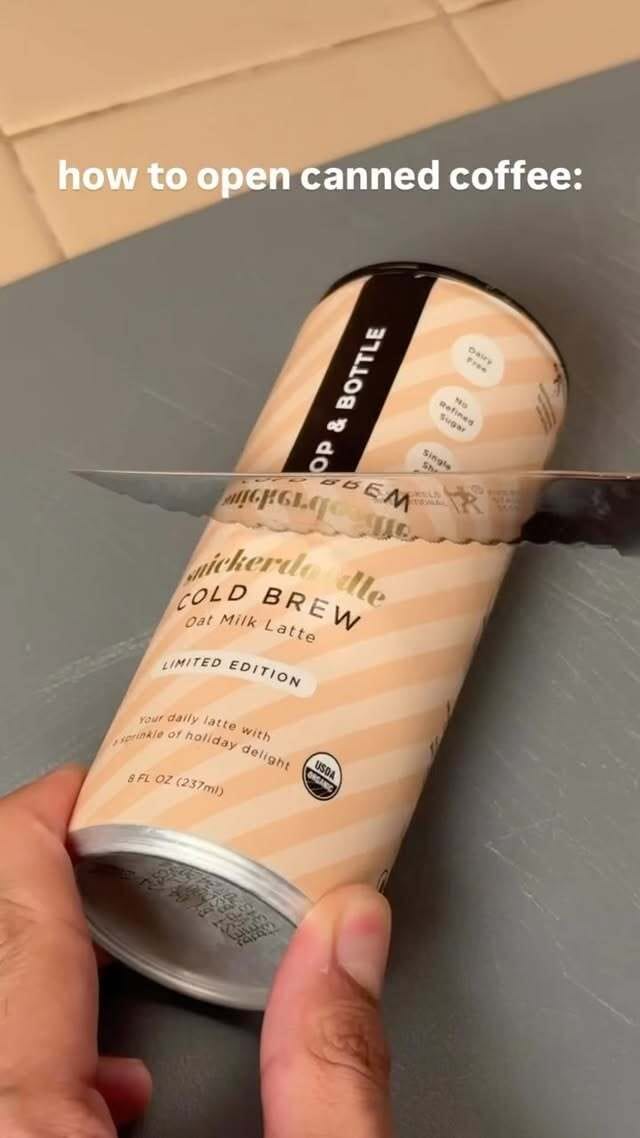
✅ What Works
1. Inverted how-to = instant pattern break - The hook text promises utility (“how to open…”), then violates expectation with a ridiculous knife-through-can demo. It also taps a familiar Khabane Lame meme so the joke is pre-understood.
2. Benign violation, not brand violation - The spill and mess feel naughty but harmless; no injury, no sharp close-ups, no real waste shown for long. The can’s USDA/benefit badges remain visible, so credibility isn’t undercut. Humor lands without making the product look fragile or flawed.
3. Label-first composition doubles as subtle PDP - Throughout the chaos, the full wrap label faces camera, flavor (“Snickerdoodle”), “Oat Milk Latte,” “No refined sugar,” etc. The joke gets the view; the packaging gets the memory imprint. It’s ad recall without feeling like an ad.
Comedy carries the click; clarity earns the save. Build short anti-tutorials that open with an absurd “wrong way,” keep brand cues visible, and land on a 1-step, satisfying “right way.” That combo maximizes retention, recall, and shareability, without production bloat.
Thanks for reading this edition of Adspire! Keep pushing boundaries, testing ideas, and staying inspired. See you in the next issue with more ways to ignite your marketing success!